
Technical Insights
What to do with RO reject: DTRO and zero-liquid discharge
Reverse osmosis gives you clean water and a concentrated stream. Here is how plants deal with the second one.
Every RO plant makes two streams
RO splits feed water into permeate, which is clean, and reject, which carries the salts and other contaminants in a smaller volume. The higher the recovery, the more concentrated the reject.
Why reject is a problem
In many places, disposing of concentrated reject is restricted or costly. If you cannot discharge it, you need to reduce it. Concentrated reject is also harder on membranes, because salts and organics are packed into less water.
Recovering more with DTRO
Disc-tube RO uses open flow channels between membrane discs. It tolerates high salinity and fouling better than spiral-wound elements, so it can take the reject from a first RO stage and recover more clean water from it.
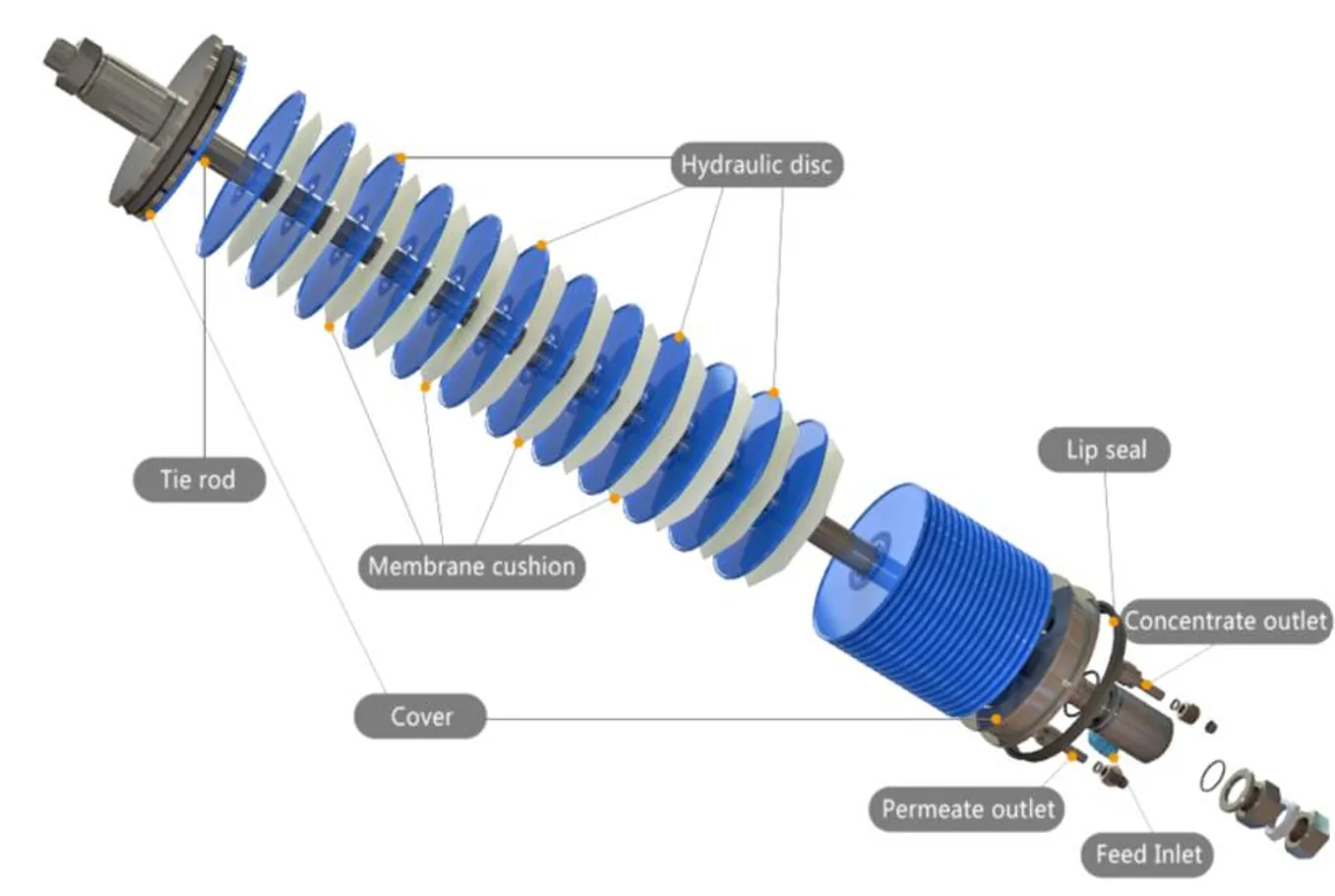
What a DTRO module looks like
A DTRO module stacks hydraulic discs and membrane cushions on a central tie rod, inside a pressure tube. Feed enters, is forced across the discs, and the open channels let salts and solids pass through instead of lodging in the module. Permeate collects from the membranes and leaves separately from the concentrate.
The open flow path is why DTRO suits difficult streams such as landfill leachate and high-salinity reject, where a spiral-wound element would block.
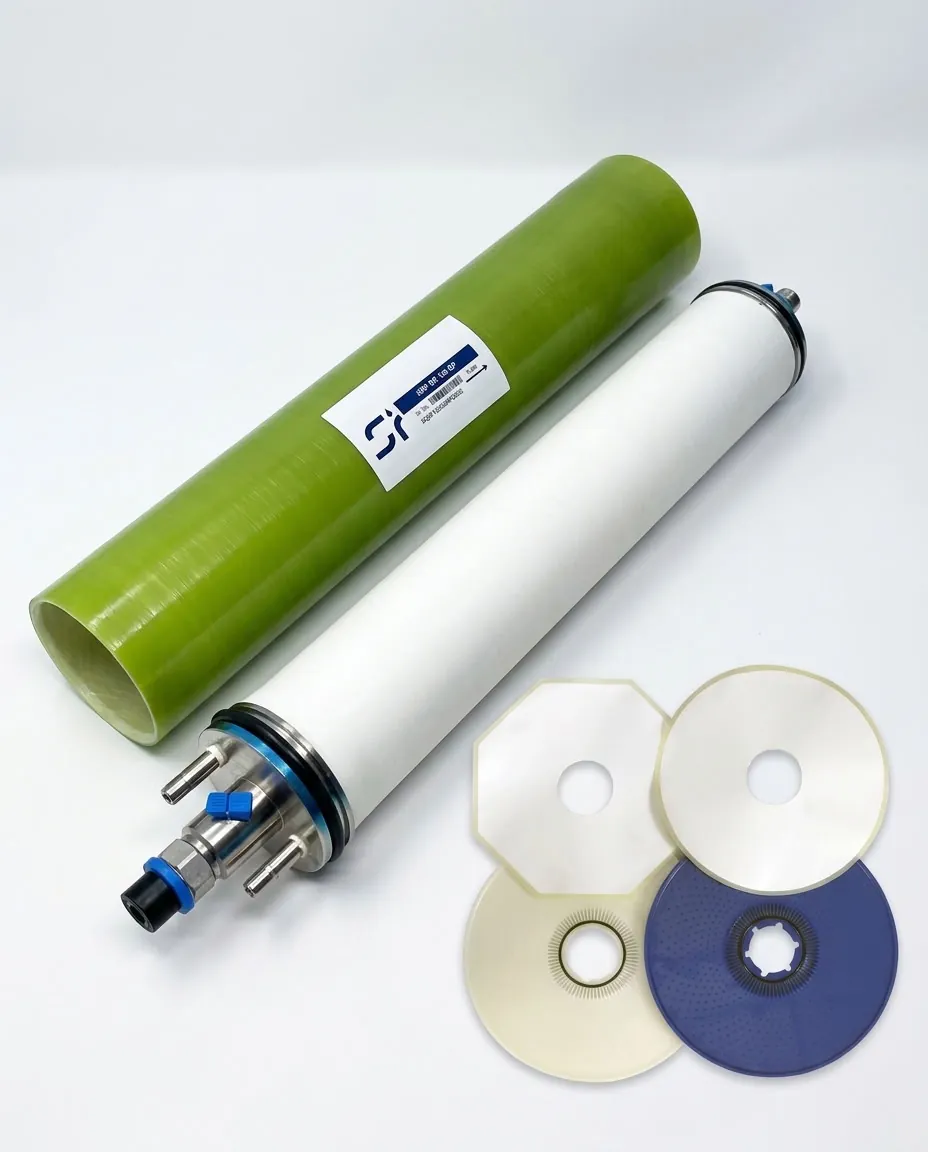
Closing the loop with ZLD
A zero-liquid discharge scheme combines these stages so almost all water is recovered. What is left is a small volume of concentrated waste or a solid. Design depends on the effluent, so each scheme is specific.
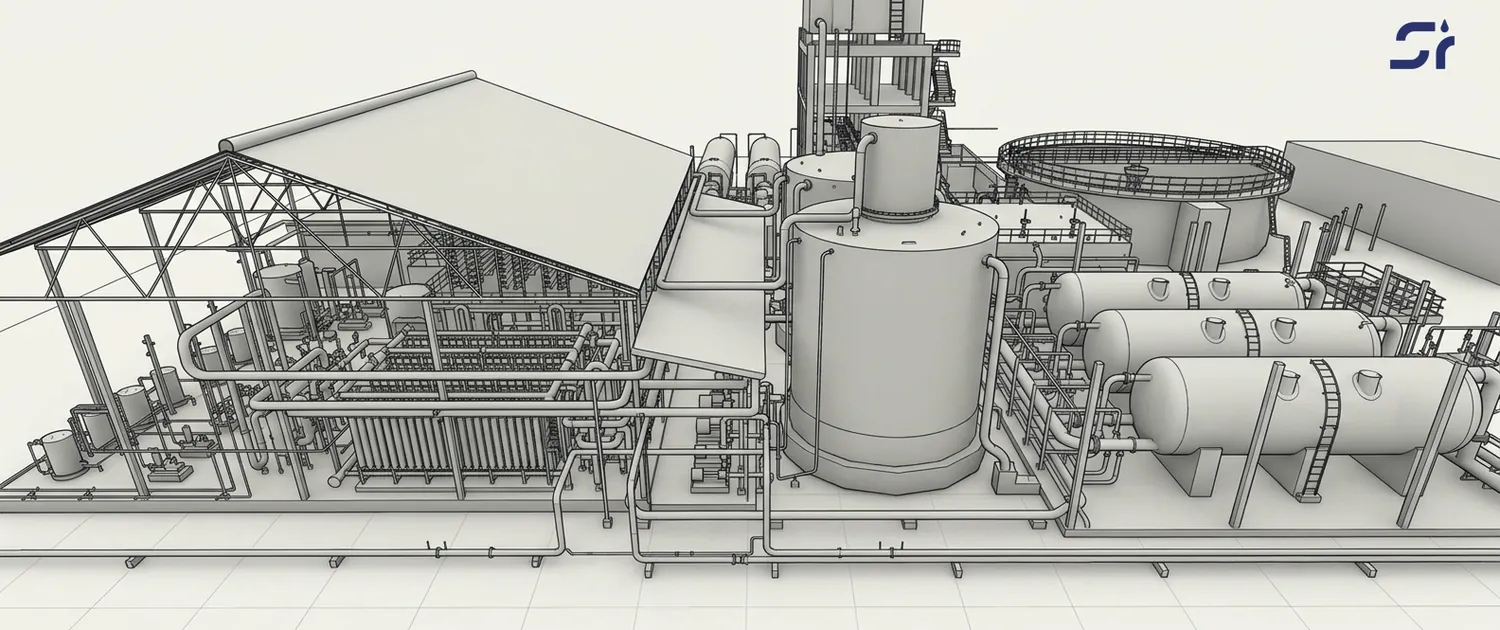
Getting a scheme designed
SRP Membranes supplies the membranes and SR Paryavaran designs and builds the plant. Send your flow and effluent analysis and we will propose a scheme.
What decides the scheme
No two reject streams are alike. Before a scheme can be designed, these have to be known:
- Reject flow and how it varies through the day
- Salinity (TDS) and the main ions
- Organics (COD) and any oil, surfactants or colour
- Scaling potential: hardness, silica, sulfate
- Where the final residue can go: a landfill, a dryer, or reuse
FAQ
Quick answers.
Is ZLD always necessary?
No. It is used when reject cannot be discharged or when water is scarce or costly. Many plants stop at RO.
Can DTRO replace spiral-wound RO?
It is normally used after a conventional RO stage, on the reject, rather than as a replacement.
Talk to our engineers
Tell us about your water.
Share your application and daily flow. We reply with a suitable membrane or a complete treatment system.
- +91 90565 26208Call or WhatsApp
- crm@srpepl.comQuotes and datasheets
- 70, Industrial Area, Phase - I, Panchkula, Haryana, India - 134113Head office
- Jebel Ali Free Zone, Dubai, U.A.E.International office